
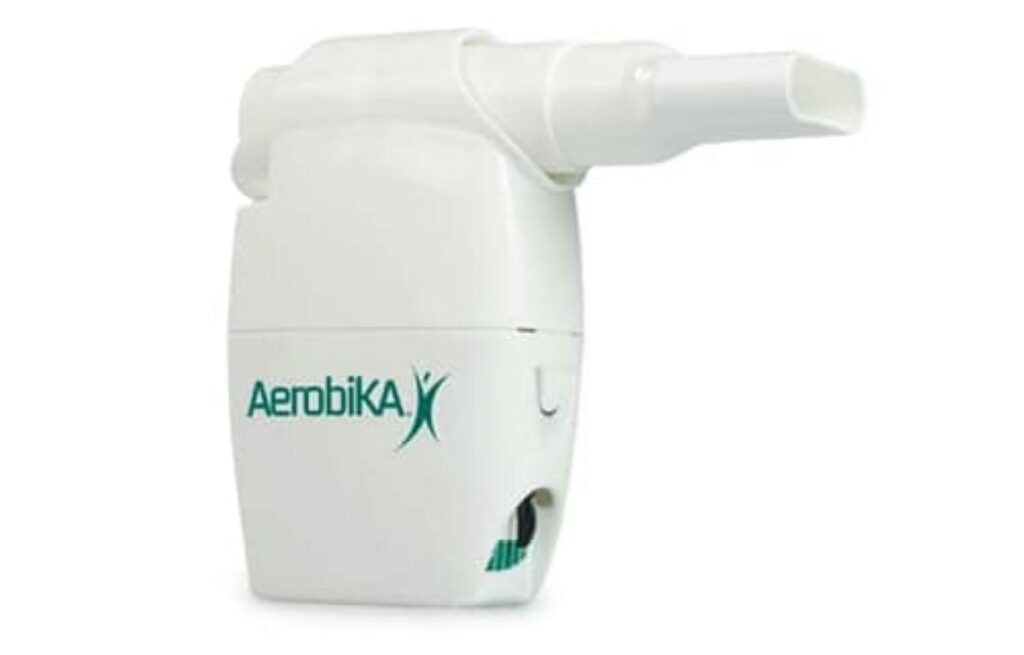
This article explains what Aerobika PEP therapy is, how it supports airway clearance, who it may help, and what safe, practical use typically looks like.
What is Aerobika PEP therapy?
Aerobika PEP therapy is a form of positive expiratory pressure (PEP) therapy delivered through a handheld device. In simple terms, they breathe out through the device, and it creates resistance and gentle vibrations that help loosen and mobilize mucus.
It is commonly used as part of an airway clearance routine for people who struggle to clear secretions effectively.
How does Aerobika support airway clearance?
It supports airway clearance by combining two helpful effects: back-pressure during exhalation and oscillation. The back-pressure helps keep smaller airways more open during breathing out, while the oscillations can help shake mucus loose from airway walls.
Once mucus is mobilized toward larger airways, it is typically easier for them to cough or huff out.
What does “PEP” actually do inside the lungs?
PEP works by creating pressure during exhalation that can reduce early airway collapse and improve airflow behind mucus. That pressure can help air get into areas that are partially blocked, which may help move secretions from “stuck” regions toward central airways.
In practice, it often means their cough becomes more productive with less strain.
How is Aerobika different from other airway clearance tools?
Aerobika is an oscillating PEP device, meaning it adds vibration-like pulses to standard PEP resistance. Compared with basic PEP devices, this oscillation can improve mucus mobilization for some people, especially when secretions are thick.
Compared with manual chest physiotherapy, it can be more self-directed, portable, and consistent once they learn the routine.
Who typically uses Aerobika PEP therapy?
It is commonly used by people with conditions associated with mucus retention, such as COPD, bronchiectasis, cystic fibrosis, or recurrent respiratory infections. It can also be used when someone has temporary mucus build-up after illness or surgery, if a clinician recommends it.
The right fit depends on diagnosis, symptoms, and their ability to use the device correctly.
What does a typical Aerobika session look like?
A session usually involves repeated cycles of breathing out through the device followed by airway clearance maneuvers. Many routines use a pattern like: several slow breaths through the device, then a pause, then huff coughing to bring mucus up and out.
Exact timing and repetition vary, so they typically follow a plan set by a respiratory therapist or clinician.
How does Aerobika pair with huff coughing and breathing techniques?
Aerobika helps move mucus into larger airways, but they still need an effective way to expel it. That is where huff coughing and controlled breathing matter, because a “huff” can move mucus with less airway collapse than repeated hard coughing for some people.
Used together, the device does the mobilizing and the technique does the clearing.
When might Aerobika be especially helpful?
It may be especially helpful when mucus is thick, sticky, or difficult to bring up, or when they experience frequent chest congestion and feel they cannot fully clear after coughing. It can also help when fatigue makes long clearance sessions hard, because a handheld device can add efficiency.
If they are noticing more sputum, wheeze, or chest tightness, they should check in with a clinician before changing routines.
Are there risks or reasons someone should avoid it?
Some people should use extra caution, or avoid PEP therapy unless cleared by a clinician, such as those with certain types of untreated pneumothorax, significant hemoptysis, or unstable cardiovascular status. They should also stop and seek medical advice if they develop dizziness, chest pain, worsening shortness of breath, or significant bleeding.
A clinician should confirm that Aerobika is appropriate for their specific condition.
How do they know if Aerobika is working?
Common signs include easier mucus movement, more effective clearance, reduced chest “rattling,” or improved breathing comfort after sessions. Over time, they may notice fewer flare-ups, better exercise tolerance, or less reliance on rescue strategies, depending on the condition.
If symptoms worsen or secretions change dramatically in color, volume, or smell, they should contact a healthcare professional.
How should they clean and maintain the device?
They typically clean it as directed by the manufacturer, often involving disassembly, washing with mild soap and warm water, thorough rinsing, and air-drying. Some routines also include periodic disinfection, depending on clinical guidance and infection risk.
Consistent cleaning matters because airway clearance devices can become contaminated if handled or stored while damp. Click here to get more about the benefits of using an oxygen breathing machine at home.
What should they ask a clinician or therapist before starting?
They should ask for a personalized airway clearance plan, including session length, breathing pattern, huff technique, and when to use bronchodilators or nebulized therapies relative to Aerobika. They should also ask how to adjust the routine during flare-ups, travel, or fatigue.
Most importantly, they should confirm goals, because “working” can mean fewer symptoms, fewer infections, or better day-to-day breathing, not just more sputum output.

What is the bottom line on Aerobika PEP therapy?
Aerobika PEP therapy supports airway clearance by helping keep airways open during exhalation and by loosening mucus through oscillations. For many people with chronic mucus retention, it can make clearance more efficient and less exhausting when paired with good technique.
They should use it under clinical guidance, monitor changes in symptoms, and keep the device clean to get the safest and most useful results.
FAQs (Frequently Asked Questions)
What is Aerobika PEP therapy and how does it work?
Aerobika PEP therapy is a handheld positive expiratory pressure (PEP) device that creates resistance and gentle vibrations when you breathe out through it. This combination of back-pressure and oscillation helps loosen and mobilize mucus, supporting effective airway clearance for people struggling to clear secretions.
How does Aerobika PEP therapy support airway clearance in respiratory conditions?
Aerobika supports airway clearance by providing back-pressure during exhalation to keep smaller airways open and oscillations that shake mucus loose from airway walls. This process moves mucus toward larger airways, making it easier to cough or huff out, which improves breathing comfort and reduces chest infections.
Who can benefit from using Aerobika PEP therapy?
Aerobika is commonly used by individuals with conditions like COPD, bronchiectasis, cystic fibrosis, or recurrent respiratory infections associated with mucus retention. It can also be helpful for temporary mucus build-up after illness or surgery when recommended by a clinician.
What does a typical Aerobika therapy session involve?
A typical session includes repeated cycles of slow breaths out through the Aerobika device followed by airway clearance maneuvers such as huff coughing. The exact timing and repetition depend on a personalized plan set by a respiratory therapist or clinician to maximize mucus mobilization and clearance.
Are there any risks or precautions associated with using Aerobika PEP therapy?
Yes, some individuals should use caution or avoid Aerobika unless cleared by a clinician—such as those with untreated pneumothorax, significant hemoptysis, or unstable cardiovascular status. Users should stop if they experience dizziness, chest pain, worsening shortness of breath, or significant bleeding and seek medical advice promptly.
How should the Aerobika device be cleaned and maintained for safe use?
The device should be cleaned regularly according to manufacturer instructions—usually involving disassembly, washing with mild soap and warm water, thorough rinsing, and air-drying. Periodic disinfection may also be recommended based on clinical guidance to prevent contamination since damp devices can harbor bacteria.